Direct vs Regular Mutual Fund Plan: The Hidden Cost Eating Your Returns
Most Indian investors do not realise that they are silently paying a broker or distributor commission every single year — often for 20 or 30 years — even after the salesperson has stopped calling.
This commission does not show up on any bill. It is quietly deducted from your NAV every day. On paper, your fund shows a return of 12%. In reality, you are getting 10.8%. That 1.2% gap does not sound like much — until you compound it over two decades.
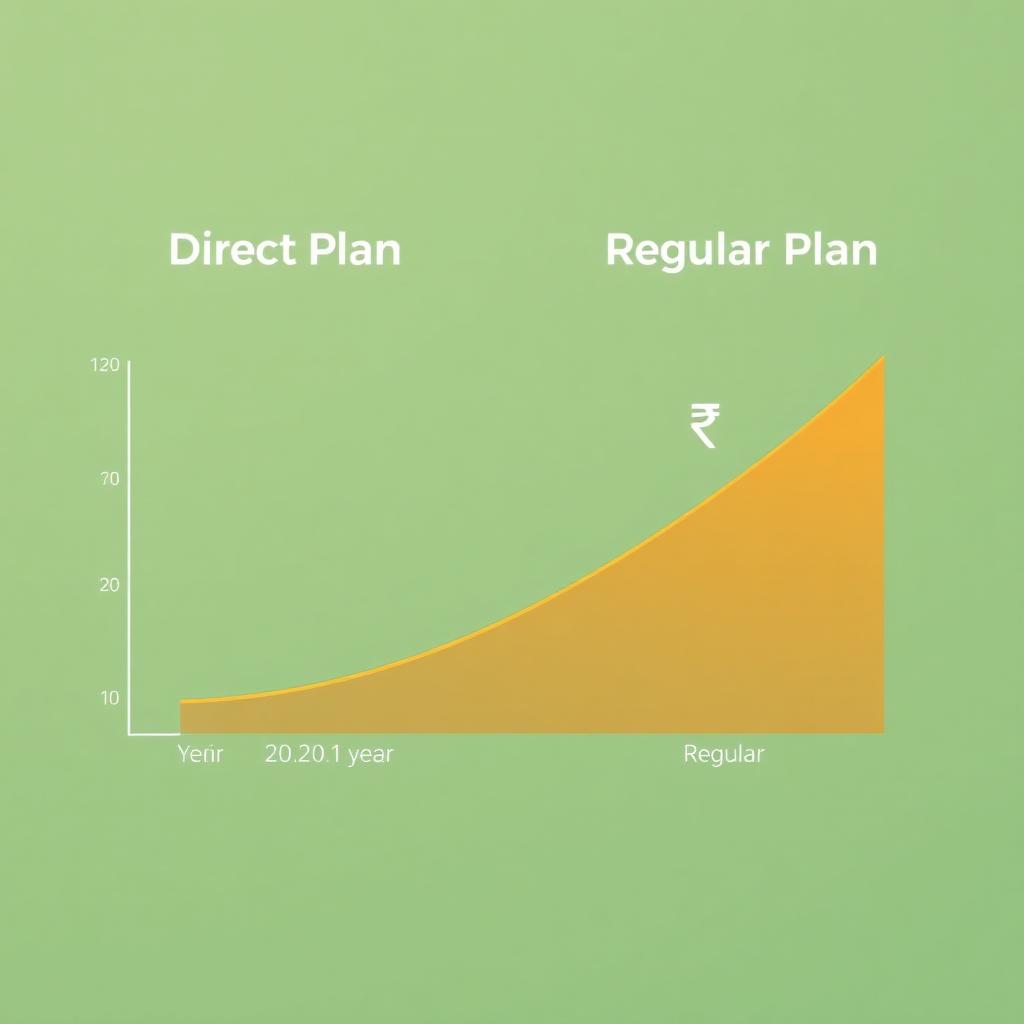
For a ₹10,000 monthly SIP running 20 years, the choice between a Direct plan and a Regular plan of the same fund can decide whether you end up with ₹99 lakh or ₹1.20 crore. That is a ₹21 lakh gift you are giving away, and most investors have no idea.
This guide breaks down the exact math, shows how to check what plan you own right now, and how to switch — without paying tax if you do it correctly.
Quick Summary: Direct vs Regular in One Table
| Feature | Direct Plan | Regular Plan |
|---|---|---|
| Total Expense Ratio (TER) | 0.3% – 1.0% | 1.2% – 2.25% |
| Distributor commission | ₹0 | 0.5% – 1.5% per year (built into NAV) |
| Where to buy | AMC website, MF Central, Fund Genie | Bank RM, broker, agent |
| Advice included | No (self-directed) | Yes (from distributor) |
| 20-year impact on ₹10k SIP | ~₹1.20 crore | ~₹99 lakh |
| Extra cost over 20 years | — | ~₹21 lakh |
The two plans hold exactly the same portfolio, same fund manager, same stocks. The only difference is the expense ratio.
What is Actually Happening Behind the NAV
Every mutual fund publishes two NAVs daily — one for the Direct plan, one for the Regular plan. Both invest the same money into the same shares. But the Regular plan's NAV grows slightly slower every day because SEBI allows the AMC to pay a trail commission to the distributor out of the fund's assets.
The 1% Rule That Costs a Crore
Here is the compounding math using the standard SIP formula:
FV = P × [((1 + r)^n − 1) / r] × (1 + r)
where P = monthly SIP, r = monthly return, n = months.
For a ₹10,000 SIP over 20 years (240 months):
- Direct plan @ 12% CAGR → ₹99.9 lakh
- Regular plan @ 10.8% CAGR (1.2% lower) → ₹83.1 lakh
- Gap: ₹16.8 lakh — money that went to the distributor, not you
For a ₹25,000 SIP over 25 years:
- Direct @ 12% → ₹4.74 crore
- Regular @ 10.8% → ₹3.82 crore
- Gap: ₹92 lakh
Curious what your own SIP will grow to? Run your numbers on our free SIP calculator — try 12% and then 10.8% to see your personal Direct-vs-Regular gap.
Real Example: Same Fund, Two NAVs
Take any large-cap fund of your choice. Check its factsheet — you will find two entries:
- Fund Name — Direct Plan — Growth: TER ~0.85%
- Fund Name — Regular Plan — Growth: TER ~1.75%
Same fund, same manager, same holdings. The 0.9% TER difference is the distributor commission. Over 15 years on a ₹15,000 SIP, that 0.9% costs roughly ₹12–14 lakh.
Why Bank RMs Never Tell You
Because they earn 0.5%–1.5% of your invested corpus every year as long as you stay invested. A ₹50 lakh portfolio silently pays your bank RM ₹25,000–₹75,000 every single year — forever. This is why you get calls to invest, never calls to switch to Direct.
How to Check Which Plan You Own — Right Now
Open your Consolidated Account Statement (CAS) from CAMS or KFintech (free, email-based). Look at the fund name:
- If it says "Direct" → good, you are on the lower-cost plan
- If it says "Regular" or has no marker → you are paying the commission
You can also check on the AMC website — the scheme name always mentions "Direct" or "Regular".
How to Switch from Regular to Direct (Without Losing Money)
You cannot "convert" a Regular plan folio into Direct. You have to redeem and reinvest. Two things to plan carefully:
1. Exit Load
Most equity funds charge 1% exit load if you redeem within 12 months. Wait out the exit load window before switching.
2. Capital Gains Tax
Equity fund redemptions attract:
- STCG (held <12 months): 20% (as per Budget 2024)
- LTCG (held >12 months): 12.5% above ₹1.25 lakh gains per year
Smart switching strategy:
- Break the switch across two financial years to use ₹1.25 lakh LTCG exemption twice (~₹2.5 lakh tax-free)
- Switch older units first (lower cost basis, but LTCG rate is fine)
- For debt funds bought after 1 April 2023 — no LTCG benefit, taxed at slab, so switching is often worth doing immediately
3. Stop Fresh SIPs in Regular and Start in Direct
Even if you cannot switch old units today, immediately stop new Regular SIPs and restart identical SIPs in the Direct plan of the same fund. This alone saves lakhs on future contributions.
Common Mistakes Indian Investors Make
- Believing the bank RM is "free advice" — they earn a commission every year you stay invested
- Thinking Direct is only for experts — the fund, portfolio, and manager are identical
- Redeeming everything in one shot — triggers a big LTCG tax hit; stagger across financial years
- Confusing Direct plan with index fund — Direct is a plan type; you can buy any active or passive fund in Direct mode
- Assuming higher TER means better performance — data from Value Research shows Direct plans consistently outperform their Regular twins by roughly the TER difference
- Ignoring debt funds — the TER gap is smaller but still 30–50 bps, and debt returns are already low, so the impact is proportionally bigger
Your Action Plan (Do This This Weekend)
Not sure how much your goal actually needs? Use the Fund Genie SIP calculator with realistic Direct-plan returns (11–12%) to plan the shortfall, and pair it with our EMI calculator if a home loan is also part of your plan.
Try It on Fund Genie
Fund Genie shows only Direct plan mutual funds — no commissions, no hidden trail fees, no RM calls. Our AI recommends funds based on your goal, risk profile, and time horizon, not on which AMC pays the highest commission.
- Calculate your SIP corpus with Direct returns →
- Check tax on switching Regular to Direct →
- Ask the Fund Genie AI: "Which of my funds are Regular plans?"
Frequently Asked Questions
Is Direct mutual fund plan safe?
Yes. Direct plans are exactly the same fund — same portfolio, same fund manager, same regulator (SEBI), same custodian. The only difference is you pay a lower expense ratio because there is no distributor commission built in.
How much can I save by switching to Direct plan?
On a ₹10,000 monthly SIP over 20 years, roughly ₹15–20 lakh. On a ₹25,000 SIP over 25 years, roughly ₹90 lakh to ₹1 crore. The gap grows exponentially with time and SIP amount.
Will I have to pay tax if I switch from Regular to Direct?
Yes, because it is treated as a redemption and fresh purchase. Equity funds attract 12.5% LTCG above ₹1.25 lakh gains per year (or 20% STCG if held under 12 months). Split the switch across two financial years to double your exemption.
Can I buy Direct mutual funds without a broker?
Yes. You can buy directly on the AMC website (HDFC MF, SBI MF, etc.), on MF Central (free), on Fund Genie, or on discount platforms like Groww/Zerodha Coin. All of these show Direct plans.
Why do banks and RMs only sell Regular plans?
Because Regular plans pay them a trail commission of 0.5%–1.5% of your invested amount every single year, for as long as you stay invested. Direct plans pay them nothing, so they never recommend them.
Do Direct plans have a higher minimum investment?
No. Minimum SIP is usually ₹500 in both Direct and Regular plans. Some AMCs even allow ₹100 SIPs in Direct.
How do I identify a Direct plan on my statement?
Look at the scheme name. It will explicitly say "Direct Plan" (e.g., "Parag Parikh Flexi Cap Fund - Direct Plan - Growth"). If it does not say "Direct", it is a Regular plan.
Is the extra TER of Regular plan tax deductible?
No. Fund expenses are deducted from NAV before returns are calculated, so you never see the deduction and cannot claim it against tax.
<script type="application/ld+json"> {"@context":"https://schema.org","@type":"Article","headline":"Direct vs Regular Mutual Fund: The Hidden Cost Killing Returns","description":"Direct mutual fund vs regular plan India 2026 — hidden 1% expense ratio gap can cost ₹20+ lakh over 20 years.","author":{"@type":"Organization","name":"Fund Genie"},"publisher":{"@type":"Organization","name":"Fund Genie","logo":{"@type":"ImageObject","url":"https://fundgenie.online/logo.png"}},"datePublished":"2026-07-06","mainEntityOfPage":"https://fundgenie.online/blog/direct-vs-regular-mutual-fund-plan-india"} </script> <script type="application/ld+json"> {"@context":"https://schema.org","@type":"BreadcrumbList","itemListElement":[{"@type":"ListItem","position":1,"name":"Home","item":"https://fundgenie.online/"},{"@type":"ListItem","position":2,"name":"Blog","item":"https://fundgenie.online/blog"},{"@type":"ListItem","position":3,"name":"Mutual Funds","item":"https://fundgenie.online/topics/mutual-funds"},{"@type":"ListItem","position":4,"name":"Direct vs Regular Mutual Fund","item":"https://fundgenie.online/blog/direct-vs-regular-mutual-fund-plan-india"}]} </script> <script type="application/ld+json"> {"@context":"https://schema.org","@type":"FAQPage","mainEntity":[{"@type":"Question","name":"Is Direct mutual fund plan safe?","acceptedAnswer":{"@type":"Answer","text":"Yes. Direct plans are the same fund — same portfolio, same manager, same SEBI regulator. Only the expense ratio is lower because there is no distributor commission."}},{"@type":"Question","name":"How much can I save by switching to Direct plan?","acceptedAnswer":{"@type":"Answer","text":"On a ₹10,000 monthly SIP over 20 years, roughly ₹15–20 lakh. On a ₹25,000 SIP over 25 years, close to ₹1 crore."}},{"@type":"Question","name":"Will I have to pay tax if I switch from Regular to Direct?","acceptedAnswer":{"@type":"Answer","text":"Yes, it is treated as redemption and fresh purchase. Equity funds attract 12.5% LTCG above ₹1.25 lakh per year, or 20% STCG under 12 months. Split the switch across two financial years to double the exemption."}},{"@type":"Question","name":"Can I buy Direct mutual funds without a broker?","acceptedAnswer":{"@type":"Answer","text":"Yes. You can buy Direct plans on the AMC website, MF Central, Fund Genie, or discount platforms. All show Direct plans."}},{"@type":"Question","name":"Why do banks only sell Regular plans?","acceptedAnswer":{"@type":"Answer","text":"Because Regular plans pay them 0.5%–1.5% trail commission every year on your invested amount for as long as you stay invested. Direct plans pay nothing."}},{"@type":"Question","name":"Do Direct plans have a higher minimum investment?","acceptedAnswer":{"@type":"Answer","text":"No. Minimum SIP is usually ₹500 in both plans. Some AMCs allow ₹100 in Direct plans."}},{"@type":"Question","name":"How do I identify a Direct plan on my statement?","acceptedAnswer":{"@type":"Answer","text":"The scheme name will explicitly say 'Direct Plan'. If it does not, it is a Regular plan."}}]} </script>Did you find this useful?